
How to Handle Office Distractions Professionally


Author: Mike Scaletti
Practical Strategies for Staying Focused, Setting Boundaries, and Maintaining Positive Professional Connections
An office can be a wonderful place to work. It provides opportunities to collaborate, exchange ideas, build professional relationships, and feel connected to a larger team. A quick conversation with a coworker can solve a problem that might otherwise take hours, while a spontaneous brainstorming session can lead to a breakthrough. Even a friendly chat over coffee can make the workday feel more enjoyable.
But shared workplaces also come with challenges, especially when it comes to maintaining focus. Between ringing phones, incoming emails, impromptu meetings, conversations across desks, and coworkers stopping by with questions, it can sometimes feel nearly impossible to concentrate on a single task. You might finally settle into an important project, only to be interrupted by someone asking for a quick favor. By the time you return to your original assignment, you have lost your train of thought and need several minutes to regain momentum.
Over time, these interruptions can affect more than productivity. They can increase stress, contribute to frustration, and create tension between colleagues. You might begin to resent the friendly coworker who regularly stops by your desk or feel guilty about telling someone you are too busy to talk. Neither reaction is particularly helpful when you are trying to maintain a positive, professional environment.
The good news is that protecting your concentration does not require becoming antisocial, avoiding coworkers, or creating an uncomfortable workplace atmosphere. In fact, learning to communicate your needs respectfully can strengthen your professional relationships by establishing clearer expectations and preventing misunderstandings. When people understand when you need to concentrate and when you are available to collaborate, everyone benefits from a more predictable and considerate work environment.
The key is learning how to manage office distractions while maintaining respectful, positive professional relationships. With a combination of self-awareness, practical productivity strategies, thoughtful workplace communication, and clear boundaries, you can create an environment that supports both meaningful work and healthy collaboration.
Whether you work in a busy open office, a small shared workspace, or a hybrid environment, the following strategies can help you reclaim your attention without making your colleagues feel unwelcome. By understanding why distractions occur, identifying your biggest challenges, and practicing respectful communication, you can make your workday more productive and less stressful.
Why Distractions Happen in Shared Workplaces
The Office Is Designed for Both Work and Interaction
One of the biggest challenges of maintaining concentration in an office is that the workplace serves several purposes simultaneously. It is a place where individuals must complete their own responsibilities, but it is also an environment where teams exchange information, solve problems, coordinate activities, and build relationships. These goals are all important, but they do not always align perfectly.
An employee preparing a detailed financial report might need an hour of uninterrupted concentration. Meanwhile, the person sitting nearby may need to make several phone calls, consult with colleagues, and respond to questions from customers. Neither person is doing anything wrong, and both may be fulfilling their responsibilities appropriately. They simply have different requirements for completing their work successfully.
Recognizing this distinction is an important first step toward managing workplace distractions without damaging relationships. Instead of assuming that interruptions happen because colleagues are inconsiderate, consider the possibility that they are responding to the demands of their own positions. This shift in perspective can help you approach workplace distractions as a practical challenge rather than a personal conflict.
Social Interaction Is a Natural Part of Office Culture
Human beings are social, and workplace relationships contribute significantly to the overall employee experience. Coworkers develop friendships, celebrate milestones, share stories, and offer encouragement during challenging periods. These interactions can strengthen workplace culture, encourage teamwork, and help employees feel supported and valued.
However, even positive social interactions can become disruptive when they occur at inconvenient times. A coworker might stop by to share an amusing story while you are reviewing a complicated document. You appreciate their friendliness, but the interruption forces you to stop working and redirect your attention. The interaction is enjoyable in principle, but the timing makes it difficult to welcome.
A brief exchange during a scheduled break might strengthen your relationship, while the same exchange during a demanding assignment could create unnecessary stress. Learning to distinguish between valuable social interaction and poorly timed interruptions helps you protect both your productivity and your professional connections. The objective is not to eliminate casual conversation, but to create appropriate opportunities for it.
Open Office Environments Create Additional Challenges
Open office layouts are common in many organizations because they can encourage collaboration, make communication easier, and allow teams to share resources. Unfortunately, these environments can also expose employees to a constant stream of sensory distractions. Nearby conversations, office equipment, movement through shared spaces, ringing phones, video meetings, and groups gathering around workstations can all compete for attention.
Even when these sounds and activities are relatively minor, their combined effect can make concentration more difficult. A conversation happening several desks away might not be particularly loud, but your attention may naturally shift toward recognizable words or familiar voices. Similarly, movement in your peripheral vision can draw your attention away from your computer screen, especially when you are working on something mentally demanding.
Not everyone experiences these distractions in the same way. Some people thrive in lively environments, while others find that even low levels of background activity interfere with their concentration. Neither preference is inherently better, and a productive workplace should recognize that employees have different focus needs. Finding ways to accommodate these differences can improve both individual performance and overall team effectiveness.
Technology Has Created a Second Layer of Distraction
Physical interruptions are only part of the problem. Modern office workers also face a steady flow of digital communication, including email notifications, messaging applications, calendar reminders, task management platforms, and mobile devices. Because many of these messages relate to legitimate business needs, employees may feel obligated to respond immediately, regardless of what they are currently doing.
The result can be a workday filled with frequent transitions between activities. You might begin writing a proposal, receive a message about a meeting, answer an email, return to the proposal, and then respond to another request before finishing your original thought. This pattern can make a busy day feel productive even when relatively little focused work has been completed.
Digital communication is essential in most workplaces, but constant availability is not always necessary. The challenge is determining which messages require immediate attention and which can wait until a more appropriate time. Developing that distinction can help employees maintain responsiveness without allowing every notification to determine their priorities.
Workplace Expectations Can Make Boundaries Difficult
Some offices develop an informal culture in which employees are expected to be constantly available. People may assume that sitting at your desk means you are free to talk or that an unanswered message indicates a lack of cooperation. These expectations can make it uncomfortable to set boundaries, particularly for newer employees who are still trying to establish themselves as approachable and dependable teammates.
You might worry that asking for quiet time will make you appear unfriendly, unhelpful, or unwilling to collaborate. However, there is an important difference between being accessible and being available every moment of the day. A dependable employee is not necessarily someone who responds to everything immediately, but someone who communicates clearly, follows through on commitments, and makes appropriate time for both independent work and collaboration.
When organizations encourage employees to balance concentration with communication, productivity and workplace relationships can improve together. Employees become better equipped to manage their responsibilities, and coworkers gain clearer expectations about when and how to communicate. The first step toward achieving this balance is understanding the specific distractions that affect your own workday.
How to Identify Your Biggest Focus Challenges
Before changing your office habits, it helps to understand exactly what is interrupting your concentration. Not every distraction has the same cause, and different challenges require different solutions. A coworker who frequently stops by your desk, for example, calls for a different approach than an overloaded email inbox or an uncomfortable workstation.
Taking time to identify your biggest obstacles will help you develop a more effective and sustainable plan. Rather than attempting to eliminate every possible interruption, focus on understanding which distractions have the greatest impact on your responsibilities and well-being.
Start With a Simple Distraction Audit
For three to five workdays, pay attention to the moments when you lose focus. You do not need an elaborate productivity application or a complicated tracking system, since a small notebook, simple spreadsheet, or note on your phone can provide useful information. Whenever you experience a noticeable interruption, briefly record what happened and how it affected your work.
Consider the following questions:
What were you working on when the interruption occurred?
What caused you to lose concentration?
Was the interruption necessary, or could it have waited?
How difficult was it to return to your original task?
Did the interruption happen at a particular time of day?
Was there anything you could have done to prevent or reduce it?
You might discover that coworkers frequently interrupt you during your most productive morning hours. Alternatively, you may realize that your biggest distractions are self-generated, such as checking email whenever a task becomes difficult or reaching for your phone whenever you feel mentally tired. Identifying these patterns allows you to address the causes rather than simply reacting to the symptoms.
The purpose of the audit is to collect useful information, not to assign blame or criticize yourself for becoming distracted. Everyone experiences interruptions, and even highly productive employees struggle with concentration from time to time. Understanding your habits is the foundation for making constructive changes.
Separate External and Internal Distractions
External distractions come from your surrounding environment and the people or activities within it. These might include conversations, phone calls, office visitors, questions from coworkers, meetings, notifications, or unexpected requests. Some are unavoidable parts of your job, while others may be managed through scheduling, communication, or environmental adjustments.
Internal distractions originate from your thoughts, habits, or emotional state. Examples include worrying about unfinished assignments, feeling overwhelmed by a long task list, repeatedly checking the time, thinking about personal responsibilities, or struggling to decide where to begin. These distractions can be just as disruptive as workplace noise, although they may require different solutions.
If a noisy workspace is your primary challenge, you might benefit from relocating temporarily, using appropriate headphones, or discussing quiet periods with your team. If your attention frequently drifts because you feel overwhelmed, a clearer task list, more realistic schedule, or short break might be more effective. Many employees experience both types of distractions, so a combination of strategies may be necessary.
Identify Your Most Demanding Tasks
Different types of work require different levels of concentration. Responding to routine messages may not require the same mental effort as analyzing data, writing a complex report, reviewing a contract, or preparing an important presentation. Understanding the concentration demands of your responsibilities can help you organize your time more effectively.
Create a list of your regular assignments and identify which ones require sustained attention. These tasks deserve the strongest focus protections because interruptions may have a greater impact on accuracy, efficiency, or the quality of your work.
For example, imagine that you regularly handle three categories of responsibilities: administrative tasks, collaborative projects, and detailed analytical assignments. Administrative tasks might be suitable for periods when the office is busy, while collaborative projects may benefit from scheduled conversations and meetings. Analytical assignments, on the other hand, might require longer periods of uninterrupted concentration.
Organizing your schedule around these distinctions can improve productivity without requiring the entire office to remain quiet throughout the day. Instead of trying to create ideal working conditions for every assignment, you can reserve your most protected periods for the responsibilities that need them most.
Pay Attention to Your Natural Energy Patterns
Most people experience changes in alertness and concentration during the workday. Some employees feel especially sharp in the morning, while others become more productive after lunch or during the quieter hours of the afternoon. Paying attention to these patterns can help you identify when focused work is most likely to be successful.
Consider when you generally complete your best work. Are you most focused shortly after arriving at the office, or do you find complex assignments easier once you have handled your daily correspondence? Does your concentration decrease after several consecutive meetings, or do you find it easier to concentrate once the busiest part of the day has passed?
If your schedule allows, reserve your strongest concentration periods for demanding assignments. Use less demanding periods for email, administrative responsibilities, informal conversations, and other tasks that are easier to pause and resume. Matching your responsibilities to your energy levels can help you make better use of the time available.
Of course, not every role provides this flexibility. Customer-facing positions, reception work, and jobs involving urgent requests may require frequent availability throughout the day. In those situations, the goal may be to protect shorter intervals or coordinate coverage with colleagues rather than scheduling long periods of uninterrupted time.
Evaluate Your Physical Workspace
Your physical environment can influence how easily you maintain concentration. Office ergonomics is often associated with reducing physical discomfort, but a well-organized workspace can also support more consistent attention. When your workstation is uncomfortable, cluttered, or poorly arranged, minor frustrations can compete with the mental energy you need for your assignments.
Consider whether your desk setup contributes to distraction. Is your monitor positioned comfortably, or do you frequently shift in your chair because your posture is uncomfortable? Are important materials buried beneath unrelated paperwork, or do you need to get up repeatedly to retrieve everyday supplies?
Small adjustments can make your working environment more functional. Keeping frequently used items within comfortable reach, arranging your desk to minimize unnecessary clutter, positioning your screen appropriately, and using suitable lighting may help reduce avoidable disruptions.
You should also consider whether your workstation exposes you to unnecessary visual activity. If you constantly find yourself watching people walk past your desk, changing your screen orientation or requesting a different seating arrangement may help, where practical. A comfortable workspace will not eliminate every distraction, but it can remove sources of friction that make sustained attention more difficult.
Consider the Emotional Side of Distraction
Sometimes what appears to be a concentration problem is actually connected to stress. When you feel pressured by deadlines, worried about performance, or frustrated by repeated interruptions, it may become harder to concentrate. You might then fall behind, become more stressed, and find yourself even more susceptible to distraction.
This cycle can be particularly frustrating because it makes ordinary workplace interruptions feel increasingly overwhelming. A conversation that would normally seem harmless might become irritating when you are already struggling to complete an important assignment.
Pay attention to how distractions affect your mood as well as your productivity. If you notice growing irritation, anxiety, or mental fatigue, those feelings may indicate that your current workload or environment needs adjustment. Avoid waiting until frustration builds into resentment toward your coworkers, since that can turn a manageable issue into a relationship problem.
If interruptions consistently prevent you from meeting deadlines, a conversation with your supervisor about workload expectations and scheduling may be appropriate. Discussing the issue early can make it easier to identify practical solutions before the situation becomes more stressful.
Choose One Challenge to Address First
Once you understand your distraction patterns, resist the temptation to overhaul your entire routine. Trying to change too many habits simultaneously can create additional stress, and it may become difficult to determine which adjustments are actually helping.
Instead, choose the distraction that has the greatest impact on your work and appears reasonably possible to improve. Perhaps your biggest challenge is responding to every message immediately, a recurring afternoon conversation near your desk, or a calendar filled with meetings that leave little time for independent work.
Address that issue first and give yourself time to evaluate the results. A single successful change can create momentum and make future adjustments feel more achievable, especially when it produces a noticeable improvement in your workday.
Polite Ways to Protect Concentration
Once you have identified your biggest distractions, the next step is developing practical ways to protect your attention. The most effective strategies allow you to remain friendly, cooperative, and responsive while creating enough structure to complete your responsibilities. Rather than attempting to isolate yourself completely, focus on building habits that support concentration and preserve appropriate opportunities for interaction.
Schedule Dedicated Focus Periods
One useful productivity technique is time blocking. Instead of approaching the workday as an uninterrupted stream of tasks and requests, divide portions of your schedule into periods dedicated to specific activities.
For example, you might reserve the first hour of your morning for a complicated project, set aside time before lunch for emails and questions, and schedule collaborative work later in the afternoon. The precise schedule will depend on your responsibilities and your team's needs, but the underlying principle is to create intentional space for tasks that require sustained concentration.
When possible, add these periods to your calendar so coworkers can see that you are occupied. You might label them "Project Focus Time," "Report Preparation," or "Independent Work." These labels communicate that you are actively working without suggesting that other people are unwelcome or that communication is discouraged.
Be realistic about how much uninterrupted time your position allows. A protected 30-minute period that you can consistently maintain is often more useful than a two-hour block that conflicts with the demands of your role. Starting with a manageable period also makes it easier for your coworkers to adjust to your new routine.
Use Friendly Visual Signals
Sometimes coworkers interrupt simply because they have no way of knowing whether you are concentrating. In workplaces where it is appropriate, a gentle visual signal can help communicate your availability without requiring an awkward conversation every time someone approaches.
For example, wearing headphones may indicate that you are focusing on an assignment. A small desk sign might explain that you are working on a deadline and will be available shortly, while a digital status message can serve a similar purpose for coworkers communicating remotely.
These signals work best when your team understands what they mean. Rather than assuming everyone will interpret headphones as a request for quiet, explain your intention in a friendly conversation. You might say, "I'm going to start using headphones when I'm working on detailed reports. If I have them on, feel free to message me, and I'll respond during my next break."
This approach establishes a reasonable expectation without making coworkers feel rejected. It also gives them a clear way to reach you when they have questions or need assistance.
Remember to follow workplace policies and safety requirements when choosing visual signals. Headphones may not be appropriate in roles where employees must hear customers, equipment, announcements, or urgent requests, so consider alternatives that suit your particular environment.
Manage Digital Notifications More Intentionally
If every incoming message produces a sound, banner, or screen notification, your attention may be redirected dozens of times throughout the day. Even when you do not respond, noticing the message can shift your thoughts away from your original assignment.
Consider adjusting notification settings so that only genuinely important messages interrupt your focus periods. You may be able to silence nonessential alerts, close unnecessary browser tabs, or use a focus status within your organization's communication software.
Another option is to review messages at planned intervals rather than continuously monitoring your inbox. For example, if your responsibilities allow it, you might check email at the beginning of the day, before lunch, and during a scheduled afternoon communication period. This approach creates predictable opportunities to respond while reducing unnecessary interruptions during demanding assignments.
Other jobs require more frequent monitoring, and your schedule should reflect those obligations. The goal is not to become difficult to contact, but to distinguish between communications that require immediate attention and those that can wait for a reasonable response. If your company has established response expectations, make sure your approach remains consistent with them.
Learn to Pause Conversations Without Ending Them
One of the most important workplace communication skills is knowing how to postpone a conversation politely. Imagine that a coworker stops by your desk to discuss their weekend while you are finishing a report. You want to be friendly, but you also need to meet your deadline.
Instead of continuing the conversation while silently becoming frustrated, acknowledge the person and offer another time to connect. You might say, "That sounds interesting! I'm trying to finish this report before my meeting, but I'd love to catch up during lunch."
This response communicates several things at once. It shows that you are interested in the coworker, explains why you cannot talk immediately, and provides an alternative opportunity for interaction. You are protecting your time without dismissing the relationship.
Other useful phrases include:
"I'd love to hear more, but I need to concentrate for a little while. Could we catch up later?"
"I'm right in the middle of something important. Could I come find you when I'm finished?"
"I want to give this my full attention. Would you mind if we talked in about 20 minutes?"
"I'm working against a deadline right now. I'd be happy to help once I finish this section."
"That sounds like something worth discussing properly. Could we save it for our afternoon break?"
The language should feel natural to you and suit your office culture. Most importantly, follow through when you suggest another time, since doing so reinforces that your boundary is about timing rather than avoiding the person.
Make Yourself Available at Predictable Times
One of the best ways to reduce unnecessary interruptions is to make appropriate opportunities for communication more predictable. If coworkers know they can ask routine questions during a specific period, they may be less likely to interrupt you repeatedly throughout the day.
For example, you could establish a brief morning check-in with a teammate, encourage nonurgent questions through your normal messaging system, or set aside time after lunch for project discussions. Managers may find regular office hours especially useful when employees frequently need guidance or approval.
Predictable availability can make boundaries feel less personal because everyone understands when and how to connect. It also prevents the impression that focused employees are avoiding collaboration, since coworkers can see that time has been deliberately reserved for discussion and support.
Distinguish Urgent Questions From Routine Requests
Not every interruption should be postponed. Some workplace situations genuinely require immediate attention, particularly when they involve customers, safety, deadlines, or problems that prevent others from doing their jobs.
Before introducing strict focus boundaries, consider which requests reasonably deserve priority. A coworker asking where to find a document may be able to wait a few minutes, while a teammate reporting a critical issue affecting a customer may require an immediate response.
You can help coworkers understand the difference by establishing simple communication expectations. For example, routine questions might be sent through a messaging platform, while urgent issues may justify a phone call or direct conversation. This system works best when the team agrees on what qualifies as urgent, since employees may otherwise interpret the same situation differently.
Making reasonable exceptions does not undermine your boundaries. It demonstrates that you understand the difference between protecting your concentration and fulfilling your responsibilities to your coworkers, customers, and organization.
Create a Workspace That Supports Attention
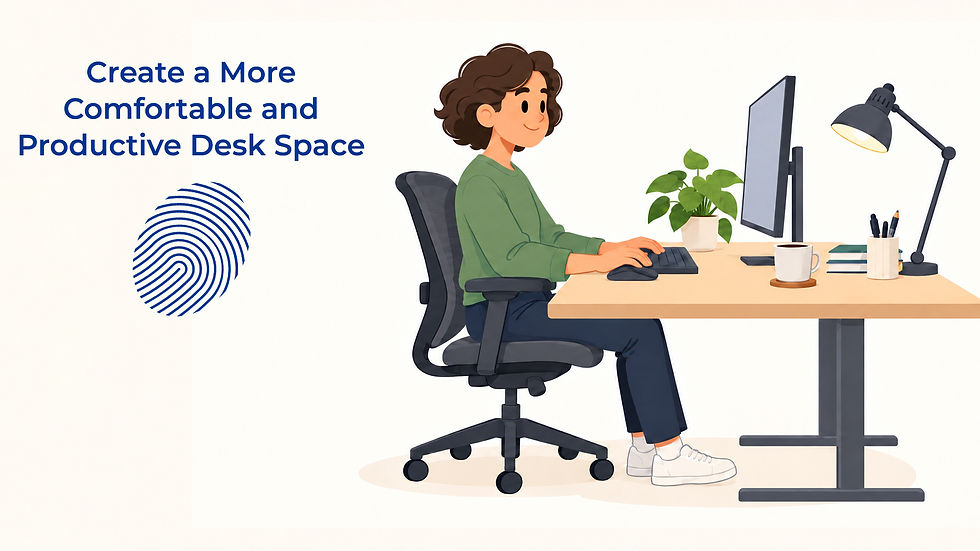
Practical adjustments to office ergonomics can complement your communication boundaries. Keeping the materials needed for your current assignment accessible and moving unrelated paperwork out of your immediate working area can reduce unnecessary visual clutter and make it easier to remain focused.
Adjust your chair, screen, and keyboard positioning to support comfortable working habits. Reduce avoidable glare and use lighting appropriate for your tasks, while keeping frequently used supplies within comfortable reach. These adjustments may seem minor, but they can prevent repeated physical disruptions that interrupt your workflow.
If permitted, consider using a desk divider or positioning your workstation to limit unnecessary movement within your field of vision. You might also keep a notebook nearby to capture unrelated thoughts and tasks that arise during focused work.
For example, if you suddenly remember that you need to schedule an appointment or send a routine email, write it down rather than immediately switching activities. This small habit allows you to acknowledge the thought without letting it derail your current assignment.
Remember that comfort and accessibility needs vary. Employees who require particular equipment or accommodations should work with their employer to identify appropriate arrangements, since an effective workspace is one that supports the individual using it.
Build Short Breaks Into Your Schedule
Protecting concentration does not mean attempting to focus continuously for the entire workday. Mental effort requires recovery, and breaks can provide opportunities to move, rest your eyes, refresh your attention, and connect with coworkers.
Depending on your responsibilities, you might work in focused intervals followed by short breaks. Some people enjoy the Pomodoro Technique, which traditionally involves 25 minutes of focused activity followed by a five-minute break. Others prefer longer work periods with less frequent interruptions, particularly when working on assignments that take time to establish momentum.
Experiment with a rhythm that suits your tasks and energy levels rather than assuming one method works for everyone. When your schedule permits, use breaks intentionally by standing up, stretching, getting some water, or enjoying a brief conversation with a colleague.
These moments can satisfy the natural desire for social connection while reducing the likelihood that informal conversations will interfere with demanding assignments. They also provide a healthy reminder that productivity is not measured solely by how long you remain seated at your desk.
Be Mindful of Your Own Interruptions
Managing distractions is a shared responsibility. If you want coworkers to respect your concentration, it is equally important to respect theirs.
Before approaching someone's desk, consider whether your question requires an immediate answer. Could you send a message instead, or would it be better to ask during a scheduled meeting? Is the person clearly concentrating on something important, and could interrupting them create an unnecessary disruption?
Even a quick question can interrupt another employee's thought process. A respectful approach might be, "Do you have a minute, or would another time be better? I have a question about the upcoming project, but it isn't urgent."
Giving coworkers the opportunity to choose when they respond demonstrates consideration and encourages similar behavior throughout the team. When everyone makes an effort to respect one another's concentration, the entire workplace can become more productive and less stressful.
Protect Your Focus Without Becoming Unapproachable
There is a difference between establishing boundaries and creating barriers. You do not need to avoid eye contact, ignore friendly greetings, or appear irritated whenever someone approaches your workstation. In fact, small gestures of courtesy can help maintain positive relationships even when you are unable to engage in a lengthy conversation.
Smile when greeting coworkers, acknowledge their questions, thank them for their patience, and make time for appropriate conversation when you are available. When colleagues consistently experience you as respectful and dependable, they are more likely to understand that your focus boundaries support your work rather than reflect a lack of interest in them.
Professionalism involves knowing when to engage, when to concentrate, and how to communicate the difference. These skills help create a workplace where employees feel comfortable connecting with one another while also recognizing the importance of uninterrupted work.
How to Communicate When You Need Quiet Time
Even the best productivity system will be difficult to maintain if your coworkers do not understand your needs. Clear communication helps prevent misunderstandings and turns personal preferences into practical workplace expectations. The goal is to express your needs without criticizing the people around you or making colleagues feel responsible for every interruption.
Communicate Before Frustration Builds
One common mistake is waiting until repeated interruptions have become unbearable before saying anything. By that point, even a reasonable request may come across as irritated or confrontational because your patience has already been stretched.
Instead, discuss your concentration needs during a calm moment. You might tell a nearby coworker, "I've noticed I concentrate best when I have some uninterrupted time in the morning. I'm going to try setting aside an hour for detailed work, so feel free to message me during that time, and I'll respond afterward unless it's urgent."
This statement is constructive because it focuses on your working habits rather than the coworker's behavior. It also explains what you are changing and how the other person can still reach you, reducing the possibility that your request will be interpreted as a personal rejection.
Use Positive, Specific Language
When discussing workplace distractions, avoid statements that accuse coworkers of causing problems. Saying "You are always interrupting me" may cause someone to become defensive, even if the underlying concern is legitimate. An accusatory tone can shift the discussion away from finding a solution and toward deciding who is responsible for the problem.
A more productive statement would be, "I'm having trouble finishing this project with frequent interruptions. Could we save nonurgent questions until after 11 so I can finish the report?"
The second approach identifies a specific challenge and requests a practical adjustment. It gives the other person something concrete to respond to without making them feel personally criticized.
Whenever possible, focus on what you need rather than what someone else is doing wrong. This makes the conversation more collaborative and reduces the likelihood of unnecessary tension, especially when the other person may not have realized their behavior was disruptive.
Explain the Reason Behind Your Boundary
People are often more receptive to requests when they understand the purpose. If you need a quiet period to review important figures, complete a deadline-sensitive project, or prepare for a presentation, briefly explain that context.
You do not need to justify every minute of your schedule or disclose personal information. A simple explanation that connects your request to your responsibilities is usually enough.
For example, you could say, "I'm reviewing some detailed numbers, and I want to make sure I get everything right. Would you mind if we talked after I finish?"
This communicates that your request supports accuracy and performance. It also helps coworkers understand that the boundary is connected to a legitimate work requirement rather than a desire to avoid them.
Offer an Alternative When Possible
A boundary is often easier to accept when it includes a clear next step. Instead of saying only that you cannot talk right now, consider offering an alternative that allows the other person to receive the assistance or attention they need.
You might suggest a later conversation, ask the person to send an email, recommend bringing the question to an upcoming meeting, or offer a brief period of availability after your current task. These alternatives allow you to remain cooperative while still protecting your concentration.
For example, you might explain, "I'm working on something that needs my full attention right now. Could you send me the details so I can take a look this afternoon?"
This lets the coworker know that their request has not been dismissed. However, be careful not to promise more than you can reasonably deliver, since missed commitments can damage professional trust more than politely declining an immediate conversation. Dependable follow-through matters more than immediate reassurance.
Talk With Your Supervisor About Concentration Needs
If distractions regularly interfere with your ability to complete important assignments, consider discussing the situation with your supervisor. Approach the conversation as a productivity issue rather than a complaint about coworkers, and be prepared to explain which responsibilities are being affected.
You might say, "I want to make sure I'm giving our more detailed projects the attention they need. I've noticed that frequent interruptions make it difficult to finish them efficiently, and I was wondering whether we could reserve a regular focus period when I'm not handling urgent requests."
A supportive supervisor may be able to help establish priorities, adjust communication practices, clarify response expectations, or identify quieter working arrangements. They may also suggest solutions you have not considered, particularly if similar challenges affect other members of the team.
Be prepared to discuss the requirements of your role, including periods when you must remain available. A successful arrangement should support both your responsibilities and the needs of the organization, rather than shifting an unreasonable burden onto coworkers.
Handle Repeated Interruptions With Patience and Consistency
Sometimes a coworker continues interrupting even after you have politely explained your boundaries. This can be frustrating, especially when you have made a reasonable effort to communicate and have tried to accommodate their needs.
Before assuming the person is intentionally disregarding your wishes, consider whether your expectations were clear. Perhaps they misunderstood your schedule, forgot about the arrangement, or assumed that their questions qualified as urgent.
Try reinforcing the boundary calmly and specifically. You might say, "I know we've talked about my morning focus time, and I appreciate your understanding. I'm still finding it difficult to finish my reports when I'm interrupted, so could we try saving routine questions until after 10:30?"
Notice that the language remains respectful while clearly restating the request. You acknowledge the relationship, explain the continuing problem, and offer a workable solution without escalating the situation.
Consistency is important because coworkers need to understand when your boundary applies. If you regularly abandon your focus time for nonurgent conversations, others may become confused about whether you are truly unavailable.
If repeated interruptions continue to affect your performance, involve your supervisor when appropriate, particularly if the issue reflects conflicting work expectations. The objective should remain finding a reasonable arrangement rather than turning the situation into a personal disagreement.
Remember That Coworkers Have Different Needs
Some employees prefer working in silence, while others concentrate more comfortably with moderate background activity. Certain workers may benefit from predictable routines, written communication, noise reduction, or other environmental adjustments. These differences can reflect personal preferences, job responsibilities, accessibility needs, or a combination of factors.
Avoid assuming that your preferred environment should automatically become the standard for everyone. Instead, look for compromises that allow people with different responsibilities and preferences to work effectively.
Perhaps the team can designate a particular area for quiet work, establish shared focus hours, provide access to meeting rooms for calls, or agree on guidelines for conversations near workstations. In some workplaces, temporary relocation may be an option for employees working on especially demanding assignments.
The most successful arrangements acknowledge that employees may need different conditions to perform at their best. If a workplace adjustment involves an accommodation or formal employment requirement, that should be addressed through the appropriate organizational process.
Establish Shared Team Expectations
Individual boundaries are helpful, but shared agreements can be even more effective. When an entire team discusses how to balance concentration and communication, employees no longer need to negotiate the same expectations individually.
A team might agree that nonurgent questions should be sent through a messaging platform, that employees can block time for independent work, or that certain spaces are better suited to informal conversations. Other agreements could address meeting etiquette, response times, phone calls, and the appropriate use of status indicators.
The purpose is not to create an excessively rigid workplace or discourage spontaneous collaboration. Instead, shared expectations reduce uncertainty and help employees understand how to work together considerately.
Managers can play an important role by modeling these behaviors. When leaders respect employees' focus periods, avoid unnecessary meetings, and communicate reasonable expectations, the rest of the team receives a clear example to follow. These habits can gradually become part of the organization's everyday workplace culture.
Repair Small Misunderstandings Quickly
Even careful communication can occasionally lead to misunderstandings. A coworker may feel brushed aside when you postpone a conversation, or you may sound more abrupt than intended while dealing with a difficult deadline.
If you notice tension, address it directly and briefly rather than allowing the situation to develop into an ongoing problem. You might say, "I hope I didn't come across as dismissive earlier. I was trying to finish something before a deadline, and I didn't mean to sound abrupt."
You do not need to apologize for having a reasonable boundary, but you can acknowledge that your delivery could have been better. This distinction allows you to preserve the boundary while taking responsibility for the way you communicate it.
Maintaining healthy professional relationships does not require abandoning your needs. It requires expressing those needs in a way that reflects consideration for others and recognizing when a small gesture can prevent unnecessary resentment.
Recognize When the Problem Is Bigger Than Personal Boundaries
Sometimes an employee's difficulty concentrating is not primarily caused by poor habits or inconsiderate colleagues. The real issue may be an excessive workload, unclear priorities, understaffing, constant urgent requests, or an office environment that does not support the work being assigned.
In these situations, personal productivity techniques have limits. A better solution may involve clearer priorities, additional resources, schedule changes, revised workflows, or management support.
If you are consistently unable to complete essential responsibilities despite reasonable adjustments, document the challenges and discuss them with the appropriate person. Explain how the interruptions affect your work and identify the changes that might help.
The goal is to improve how work gets done, not to place the entire burden of organizational problems on individual employees. Healthy productivity practices work best when they are supported by reasonable expectations and a workplace culture that respects both collaboration and concentration.
Create One Focus Boundary This Week
Learning to manage office distractions is not about becoming perfectly focused or eliminating every interruption. That would be unrealistic in most workplaces, particularly those that rely on frequent communication and teamwork. Instead, the goal is to develop habits that help you complete your responsibilities while remaining a positive, supportive member of your team.
You also do not need to change everything at once to make meaningful progress. A single adjustment to the way you manage your time, organize your environment, or communicate your availability can make your workday noticeably more manageable.
This week, challenge yourself to establish one clear focus boundary that supports your productivity without unnecessarily interfering with your professional relationships.
Choose a Boundary That Addresses a Real Problem
Think about the distractions you experience most frequently. Perhaps you want to stop checking email every few minutes, or maybe you need a way to postpone casual conversations when you are concentrating. You might benefit from blocking time on your calendar, organizing your workstation, or agreeing on quieter working periods with your team.
Choose one adjustment that feels practical and relevant to your responsibilities. The goal is to find a manageable solution that addresses a genuine problem rather than adding another complicated system to your workday.
Here are several examples of focus boundaries you could try:
Reserve 30 minutes each morning for your most demanding assignment.
Turn off nonessential notifications during scheduled focus periods.
Let nearby coworkers know when you are working on a deadline.
Ask whether nonurgent conversations can happen during your next break.
Establish a predictable time for routine questions and project updates.
Make one ergonomic adjustment to create a more comfortable workstation.
Schedule brief breaks so you can recharge and connect with coworkers.
Check with your supervisor about protecting time for detailed work.
You do not need to adopt all these ideas, and some may not be appropriate for your particular position. Select the one most likely to improve your workday while respecting the responsibilities and communication expectations of your team.
Make Your Boundary Clear and Measurable
A vague goal such as wanting fewer distractions can be difficult to put into practice. A specific goal is easier to maintain because it establishes exactly what you intend to do and when you will do it.
For example, you might decide that every weekday from 9:30 to 10:00, you will concentrate on your highest-priority assignment. During that time, you will silence nonurgent notifications and let your coworkers know they can still reach you for genuinely urgent issues.
This boundary identifies the behavior you want to change, the time you are protecting, and how you will remain appropriately available. It is also manageable enough to test without making major changes to your schedule.
As you become more comfortable with this routine, you can decide whether to extend it or introduce additional boundaries. There is no need to make the process more complicated than necessary, especially when small adjustments may already produce worthwhile improvements.
Explain Your Plan to the People It Affects
If your new habit involves other employees, tell them what to expect. A brief, friendly explanation is usually sufficient, and providing advance notice can prevent coworkers from misinterpreting a change in your availability.
You could say, "I'm trying a new routine to help me finish some detailed assignments more efficiently. I'm going to protect a little time each morning for focused work, but I'll still be available for urgent questions."
Present the adjustment as an effort to improve your work rather than a judgment about how others behave. Invite practical feedback when appropriate, particularly if your plan affects someone else's responsibilities or creates scheduling challenges.
A boundary that respects the needs of your colleagues is more likely to become a sustainable part of your routine. When people understand your intentions and know how to reach you, they may also feel more comfortable establishing reasonable focus boundaries of their own.
Review What Changed
After a week, reflect on the results. Were you able to concentrate more consistently, and did you complete important tasks more efficiently? Did the boundary reduce frustration, or did it create unexpected difficulties for your coworkers?
You may discover that the change worked immediately. You might also find that your chosen focus period conflicts with team activities or that you need a different method for handling urgent questions.
Both outcomes provide useful information. Adjust your approach as necessary rather than abandoning the idea entirely, and remember that successful workplace habits often develop through small experiments, honest communication, and gradual improvements.
It can also be helpful to ask yourself whether the change has improved the quality of your interactions with coworkers. If you feel less rushed or frustrated, you may find that you are more patient, attentive, and willing to engage when conversations occur at appropriate times.
Remember That Focus and Connection Can Support Each Other
It is easy to imagine productivity and workplace relationships as competing priorities. If you concentrate, you might worry that you seem distant, while making time for coworkers can sometimes leave you feeling that your work is suffering.
But these priorities do not have to conflict. Protecting your concentration can help you complete assignments more effectively, reduce stress, and become more fully present when you do engage with colleagues. Likewise, strong workplace relationships can make it easier to coordinate schedules, communicate expectations, and receive support when deadlines become demanding.
The ideal workplace is neither completely silent nor constantly interrupted. It is an environment where employees understand that both focused work and thoughtful collaboration are essential, and where people feel comfortable communicating their needs respectfully.
The most effective boundaries are not walls separating you from your coworkers. They are agreements and habits that allow everyone to work together more successfully, with greater consideration for one another's responsibilities.
Your Next Step: One Boundary, One Better Workday
Think about the next time you are likely to become distracted at work and consider what you could do differently. Could you politely postpone a conversation, silence an unnecessary notification, set aside a short focus period, or ask your supervisor for help clarifying priorities?
Choose one action and put it into practice this week. Pay attention to how it affects your concentration, your stress level, and your interactions with colleagues, then make adjustments as needed.
Better concentration can lead to more efficient work, less frustration, and greater confidence in your ability to manage competing demands. When you communicate your needs with patience and respect, those improvements do not have to come at the expense of your relationships.
At The Job Shop, we believe that strong professional habits and healthy workplace relationships go hand in hand. Whether you are settling into a new office environment, building your career, or looking for ways to work more effectively with your team, learning to establish respectful boundaries is a valuable professional skill.
Being a great coworker does not mean being available every second of the day. It means knowing how to balance your own responsibilities with consideration for the people around you, communicating clearly, and contributing to a workplace where everyone has an opportunity to succeed.
Your challenge for this week: Create one focus boundary, communicate it respectfully, and see how it improves your workday.
Visit The Job Shop Blog for more practical advice on workplace communication, productivity, career development, and creating a more positive professional experience. Small changes to your daily habits can make a meaningful difference in the way you work, collaborate, and grow professionally.


Comments